Loading...
Serving Kenner, LA and surrounding areas. (504) 618-1502
Kenner's soft delta soil and flood zone rules make foundation work more complex here than most places. We handle the soil prep, flood elevation compliance, and Jefferson Parish permits so your foundation is solid from day one.
Foundation installation in Kenner covers the full process of building a concrete base for a new home, addition, or structure on your property - from permit application and soil excavation through the pour, curing, and final parish inspection. Most residential projects run three to six weeks from first call to completed, inspected foundation.
The challenge in Kenner is the ground itself. This city sits on the Mississippi River Delta, where layers of soft clay and silt compress under weight and shift with moisture changes. That soil requires more excavation, more compaction work, and more drainage attention than foundation work in most other parts of the country - and the shallow water table means moisture barriers are not optional. For homeowners who specifically need a slab-on-grade foundation for a new home, our slab foundation building service covers that scope in detail, including flood zone elevation compliance from the start.
A significant portion of Kenner's housing was built between the 1960s and 1980s, and some of those homes were repaired quickly after Hurricane Katrina in 2005 - meaning patches rather than proper replacements. If you are adding on to an older home or buying a property with an existing foundation, it is worth having the current base assessed before assuming it can carry new construction.
These are the signs that show up most often in Kenner homes before a foundation issue gets serious.
If interior doors that used to swing freely now drag on the floor or refuse to latch, or if windows have become hard to open and close, the frame of your home may be shifting. In Kenner, this kind of movement is often caused by the soft delta soil settling unevenly beneath the foundation. It is one of the earliest signs that something is changing below ground.
Hairline cracks in drywall are common and usually harmless, but diagonal cracks that start at the corners of door frames or windows and run toward the ceiling indicate differential settlement - one part of the foundation moving more than another. This is especially common in Jefferson Parish's soft soils. If you are seeing these cracks widen over time, it is time to have a professional look at the foundation.
Walk slowly across your floors and pay attention to any spots that feel noticeably higher, lower, or soft underfoot. In Kenner homes built on pier-and-beam systems, a springy or bouncy feeling can mean the piers have shifted or the beams have deteriorated from moisture exposure. On slab homes, an uneven floor can mean the slab itself has cracked or settled in one area.
After a heavy rain - which happens frequently in Kenner - walk around the perimeter of your home and look for water pooling against the foundation walls. Water that sits against a foundation for hours after a storm is slowly working its way into the concrete and the soil beneath it. Over time, this erodes the base your home sits on and can lead to cracking, settling, and moisture problems inside.
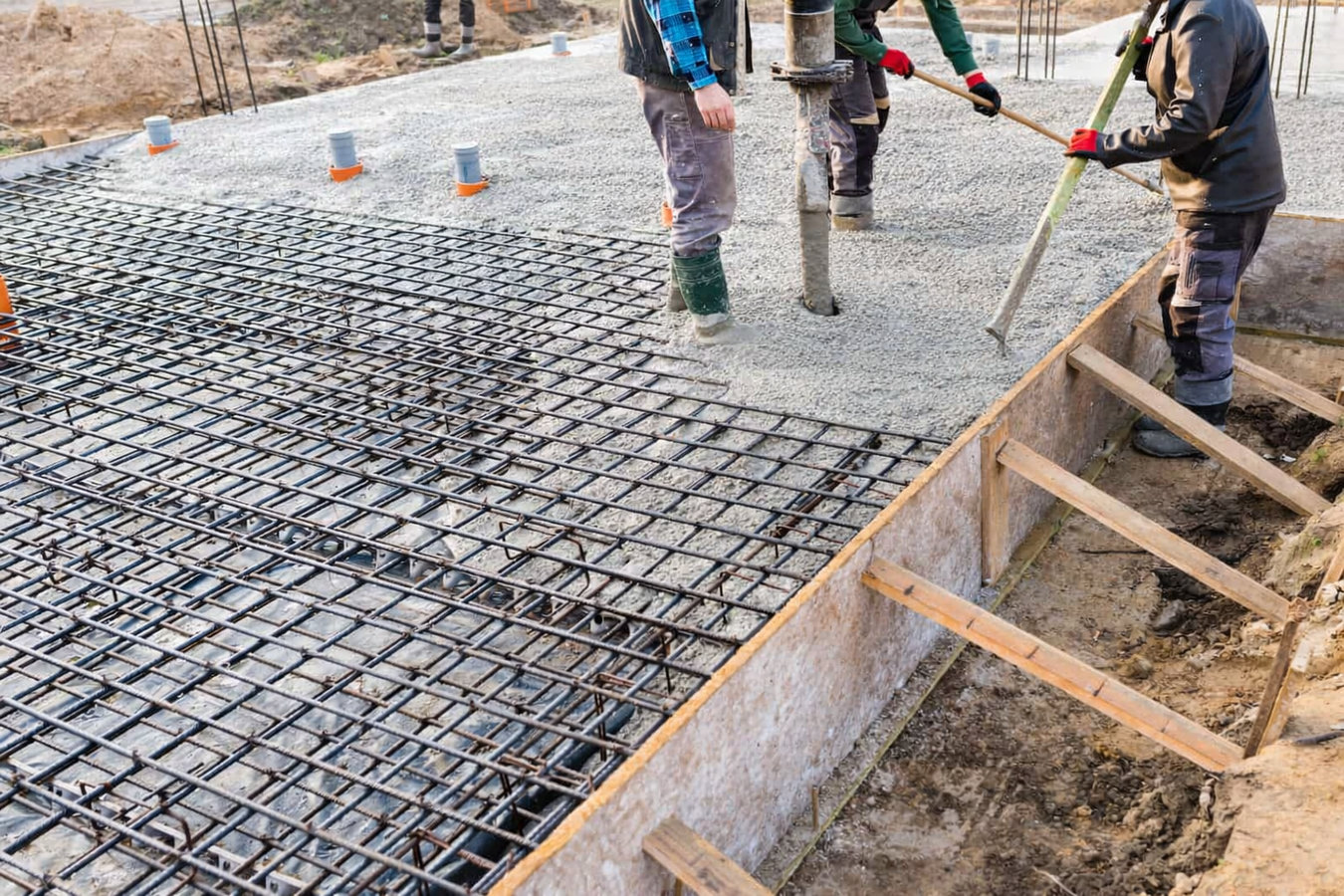
We handle the complete foundation installation process for residential projects in Kenner: site assessment, permit application through Jefferson Parish, excavation and soil compaction, gravel and moisture barrier installation, forming and steel reinforcement, the concrete pour itself, and coordination of the post-cure inspection. The two foundation types most common in this area are slab-on-grade - a single reinforced concrete layer poured directly on prepared ground - and pier-and-beam systems that elevate the structure slightly above grade. Most new construction in Kenner today uses slabs because they are faster and more cost-effective, but your lot's drainage, flood zone designation, and building type all factor into which approach makes sense for your specific project.
We also assess and repair existing foundations that have settled, cracked, or failed their moisture protection. Properties where older foundations were patched after Hurricane Katrina without being fully rebuilt sometimes show those repairs starting to fail - an on-site visit is the only reliable way to evaluate whether repair or replacement is the right call. Homeowners planning larger commercial or multi-unit projects sometimes combine foundation work with our concrete parking lot building service when the site scope includes both structural and paved surface work.
For ground-up residential construction where the lot has been cleared and is ready for site prep, forming, and pour.
For room additions, attached garages, and covered structures that need a new foundation connected to or near the existing home.
For existing foundations showing signs of settling, cracking, or moisture failure - assessed on-site before any repair plan is proposed.
Foundation work in Kenner is shaped by two conditions that are not common in most of the country: extremely soft deltaic soil and FEMA flood zone designations that affect how high your foundation must be built. The ground beneath Kenner is made up of soft clay and silt deposited over thousands of years by the Mississippi River. It compresses under weight, holds moisture, and shifts with seasonal changes in the water table. Contractors who are not experienced with this type of ground tend to underestimate how much excavation and compaction work is required - which shows up later as settling and cracking. The American Concrete Institute publishes guidance on foundation design for soft and expansive soils, and those standards are especially relevant here. Flood zone rules mean the finished floor elevation must meet Jefferson Parish requirements before the permit can be closed out - a detail that can affect your flood insurance premiums for the life of the home.
These conditions are consistent across the greater New Orleans metro. Homeowners in New Orleans, LA deal with the same soft soil and flood zone rules, and so do properties across the river in Harvey, LA. Working in this region regularly means we understand what base preparation Kenner's ground actually requires - not what a textbook says should work in different conditions. We also schedule foundation pours with hurricane season in mind, since concrete poured immediately before heavy rain events can be damaged before it finishes curing.
Here is what the process looks like from your first call to a finished, inspected foundation - with no surprises.
We schedule a visit to your property before giving you any numbers. We look at the lot, check for drainage or soil issues, and ask about what you are building or repairing. A contractor who quotes over the phone without seeing the site is guessing.
After the site visit you receive a written estimate that breaks down labor, materials, and site preparation. Once you approve and sign, we apply for the required Jefferson Parish building permit - typically one to two weeks for approval.
The crew marks out the foundation area, excavates to the required depth, compacts the ground, and installs a gravel layer and moisture barrier. In Kenner, this step includes extra attention to drainage given the shallow water table - usually one to two days of work.
On pour day the crew places concrete into the prepared forms, levels and finishes the surface, and monitors it as it sets. The concrete cures for at least a week before heavy construction begins. A Jefferson Parish inspector reviews the finished work before the permit is closed out.
We handle permits, flood zone checks, and soil prep from the first day on site. Free on-site estimate - no obligation, no phone quotes without seeing the property.
(504) 618-1502Advanced Kenner Concrete holds an active Louisiana state contractor's license through the Louisiana State Licensing Board for Contractors - you can look it up at lslbc.louisiana.gov before you sign anything. That license confirms we carry required insurance and meet the state's financial responsibility standards for work of this scope.
Jefferson Parish flood zone rules determine how high your foundation must sit above the surrounding ground. We confirm your lot's required elevation before we finalize any plan - not after - so your finished foundation meets the requirement from day one. That protects your flood insurance rates and avoids costly corrections after the concrete has already cured.
We handle the building permit application and coordinate the required inspections for every foundation project in Kenner. The permit goes on record with the parish, which matters when you sell, refinance, or file an insurance claim. We do not ask you to pull permits in your own name or skip the inspection process.
Advanced Kenner Concrete pours foundations in this area on a regular basis. We know which Kenner neighborhoods have the highest water tables, how long soil prep takes on delta clay versus gravel-amended ground, and which project timelines get compressed by summer storm season. That local knowledge reduces surprises on your project.
Foundation installation in this area is not a job where you can cut corners on soil prep or skip the flood elevation check and hope for the best. Every project we complete in Kenner goes through the full process - because that is the only way a foundation here lasts the way it should.
For permit requirements and inspection scheduling, contact Jefferson Parish Inspection and Code Enforcement. To verify a contractor's Louisiana state license, visit the Louisiana State Licensing Board for Contractors.
Commercial-grade concrete parking lots built to Jefferson Parish specs - designed for Louisiana heat, heavy traffic, and proper drainage.
Learn more about Concrete parking lot buildingSlab-on-grade foundations for new homes and additions - including full soil prep, moisture barriers, and flood elevation compliance for Kenner lots.
Learn more about Slab foundation buildingBook before hurricane season - late winter through spring is the best window for foundation pours in this area. Call or submit a form and we will schedule your site visit within 1 business day.